AI isn't a chat. It's a team you manage
Six managers, a clear definition of done, and a model sized to the task. How I run AI like a company.
In June I wrote about a company where AI writes both code and content. One thing has changed since then. I stopped working with AI as one smart assistant. I manage it as a team.
One chat that can do everything is fine for a question. Not for a company. When the same agent debugs a database in the morning, writes an offer at noon and calculates cashflow in the evening, it has no role, no procedure, and nobody knows when it's done. So I gave it an org structure.
Six managers, each owns an outcome
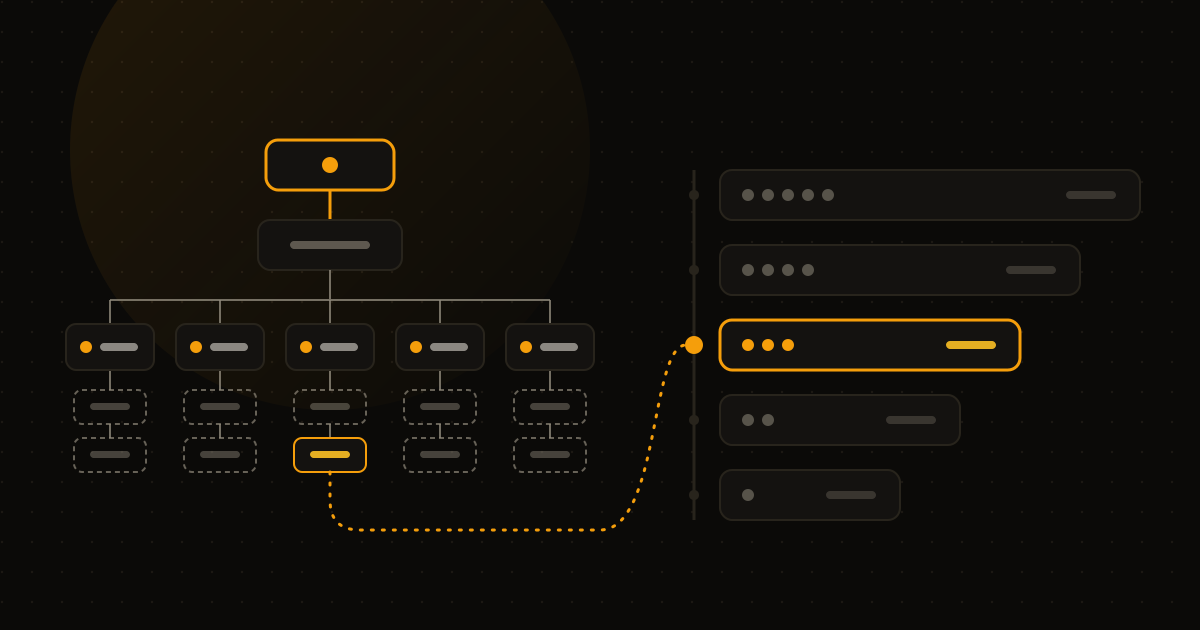
I have a CEO desk, a CTO, CSO, CMO, COO and CFO. Each knows exactly what it owns. The CEO desk owns priorities and decisions. The CTO owns product, architecture, code, deploys and security. The CSO owns offers, pricing and sales. The CMO owns content and channels. The COO owns operations and how the AI team itself gets better. The CFO owns the financial plan, cashflow and invoices.
When a task spans several areas, whoever owns the final outcome leads and borrows from the others. A quick question? It just answers. No meeting over one sentence.
I used to have a flat pile of skills. Dozens of guides side by side, and the AI was supposed to pick one itself. A tree works better: a manager on top, procedures under it, specialists under those.
A manager doesn't do everything alone
Each manager has three layers. A mission, meaning what its job is. Procedures it reads only when the situation comes up, not in advance just in case. And a team of specialists it runs as separate subagents: developer, code reviewer, designer, analyst.
From every manager I want the same thing I want from a good person in leadership: understand the goal, decide, split the work, verify the result and let me know briefly. These are directions, not a cage.
Every task gets a model by size and risk
Most people skip this part. They run everything on the same model with the same effort. Either they overpay for small stuff, or they save money where a mistake hurts.
I have five tiers:
| Tier | Typical work | Model | Example |
|---|---|---|---|
| S | a few lines, a lookup, a rename, a short text | small, fast model | rename a button in the app |
| M | one clear task in one area: a known bug, one component, one email | strong model, normal effort | fix a known bug in a form |
| L | a change across several files, an unclear bug, research, anything a customer will see | strong model, high effort | competitor research for a new product |
| XL | architecture, security, a decision or offer where a lot is at stake | strong model, maximum effort | architecture design for a new app |
| Frontier | rarely: rebuilding the whole system, or when XL fails twice | the strongest model | a bug XL failed to find twice |
The rules for choosing are short. Decide at first glance, don't analyze. Not sure? Go one tier up. It failed once? Go one tier up. And the review runs at the same tier as the work it checks. A cheap reviewer on expensive work is just a rubber stamp.
You do exactly the same with people. You don't send a senior architect to rewrite a spreadsheet. You don't send a junior to design security. With AI people forget this, because every model looks equally confident in a chat.
What it looks like together on one task:
Brief: "Make a landing page for the new course."
- Who leads: the CMO. The page is marketing, so it owns the outcome.
- Who it borrows: a designer and a developer from the CTO's team.
- Tier: L. Customers will see the page, so not M. The review also runs at L.
- Done: the code review passes, the page is tested on mobile and I have approved the copy. Deploy only on my word.
One handbook for Claude and Codex
I work with both Claude and Codex. Both read the same handbook. Roles, procedures and rules live in one folder, and a script publishes them to both tools. I edit only the original, never the copies.
It sounds like a technical detail. It isn't. Once you have two versions of the rules, you have two companies. Each behaves a little differently and you don't know which one to trust. A single source of truth matters as much for an AI team as for people.
Rules that always hold
There are few rules and they are hard:
- Done means verified. And say what isn't verified.
- Production only on request. "Build it and deploy" is an instruction to deploy. "Build it" isn't, so the agent asks.
- Backup and a way back first. Before every deploy. After it, a check that it really runs.
- Messages to partners and clients only after my yes. The agent shows me the exact wording and waits.
- Secret keys never go into files, commits or chat.
None of this is about AI. It's ordinary management hygiene. With people we take it for granted, with AI we forget to write it down. Then don't be surprised when an agent sends a client a draft or deploys something that only looks finished.
AI isn't a chat you talk to. It's a team you manage: roles, procedures, a clear definition of done, and effort sized to the task.
Where to start in your own company
You don't have to build six managers over a weekend. Start with what you already have in your company:
- Write down three to six roles you really need, and for each one sentence on what it owns.
- For each role, write what done means. Not "looks good", but something you can verify.
- Split tasks at least into small, medium and large, and assign a model to each size. When in doubt, one step up.
- Write five rules that always hold. What AI must not do without your consent.
If you don't want to start from zero, there's a free setup prompt at jankluz.com/team. Six manager roles, a group of advisors who challenge the plan before you decide, and delegation rules: who owns a task, which specialist to use and what to check before the work is declared done. I'll send it by email, no newsletter. If your tool can't run subagents, you can use the roles in a single conversation.
In June it was about the gate and verification. This is the layer above it. Who does what, at what cost and by which rules. When a new model comes out next month, I'll change one row in the tier table. The roles and the rules stay.